Cascade Messaging Guide: How to Improve Customer Communication with Multichannel Fallback and Omnichannel Delivery

Blog
Cascade messaging routes a message through a sequence of channels—starting with the most cost-effective or best-matched option, then automatically switching to the next if delivery isn't confirmed. This guide explains how the mechanism works, how it compares with multichannel and omnichannel approaches, how cascade logic can significantly cut messaging costs, and what to consider when choosing a delivery platform.
The LANCK Platform supports cascade scenarios across SMS, WhatsApp, RCS, Telegram, Viber, email, and voice. Its AI-powered fraud detection runs in parallel, analyzing over 300 behavioral parameters to identify and block artificially generated traffic before losses occur. The platform integrates via API in minutes and gives teams real-time visibility into delivery performance across every channel and market.
What Is Cascade Messaging
Cascade messaging—sometimes called cascading messaging, or fallback messaging—is a delivery strategy where a message passes through a predefined sequence of channels until a successful delivery status is received. If the first channel fails or times out, the system automatically forwards the message to the next channel in the sequence.
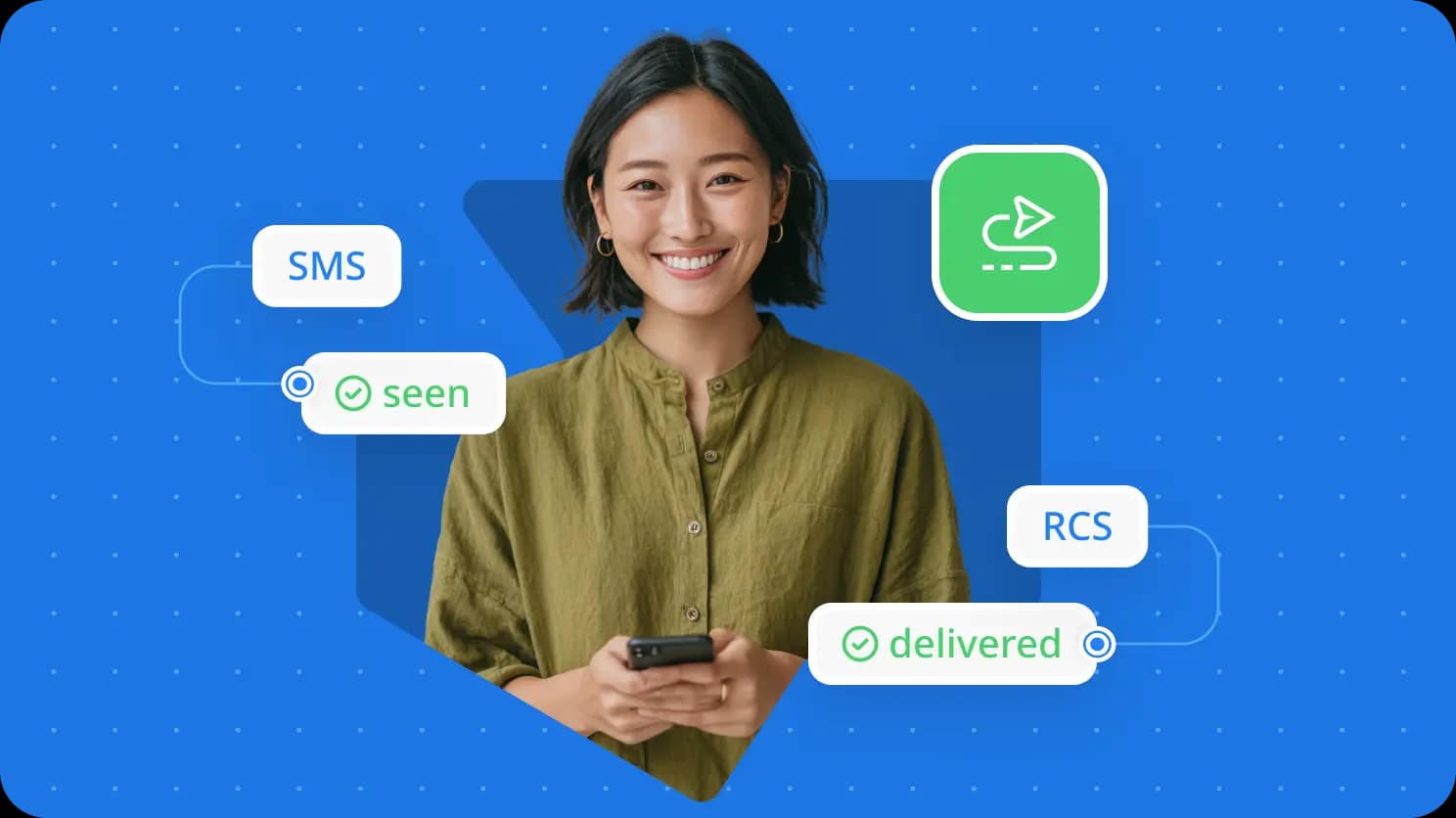
The sequence is fully configurable. A basic two-step setup might start with a messaging app and fall back to SMS. A more sophisticated cascade scenario might route through a number of messaging apps and SMS, with each step triggered by a different condition: a delivery error, a network timeout, or a "read" status that isn’t received within a set time frame.
The terms channel fallback, automatic channel fallback, and sequential messaging all describe the same mechanism. What distinguishes cascade messaging from simply "trying multiple channels" is the logic layer—the defined rules that control when to move to the next channel and what to send when you get there.
How Cascade Messaging Works
A cascade scenario has two components: a channel sequence and a set of trigger conditions. Together, they determine when the system moves from one step to the next.
Trigger Conditions and Time Frames
A trigger can be any of three things: an error returned by the operator or vendor during message delivery, an absence of any status within a defined time period, or a specific status—like "read" or "seen"—that wasn't returned in time. The time frame at each step is configurable and plays a major role in how the cascade behaves in practice.
Here's what a typical three-step cascade flow for a marketing campaign looks like:
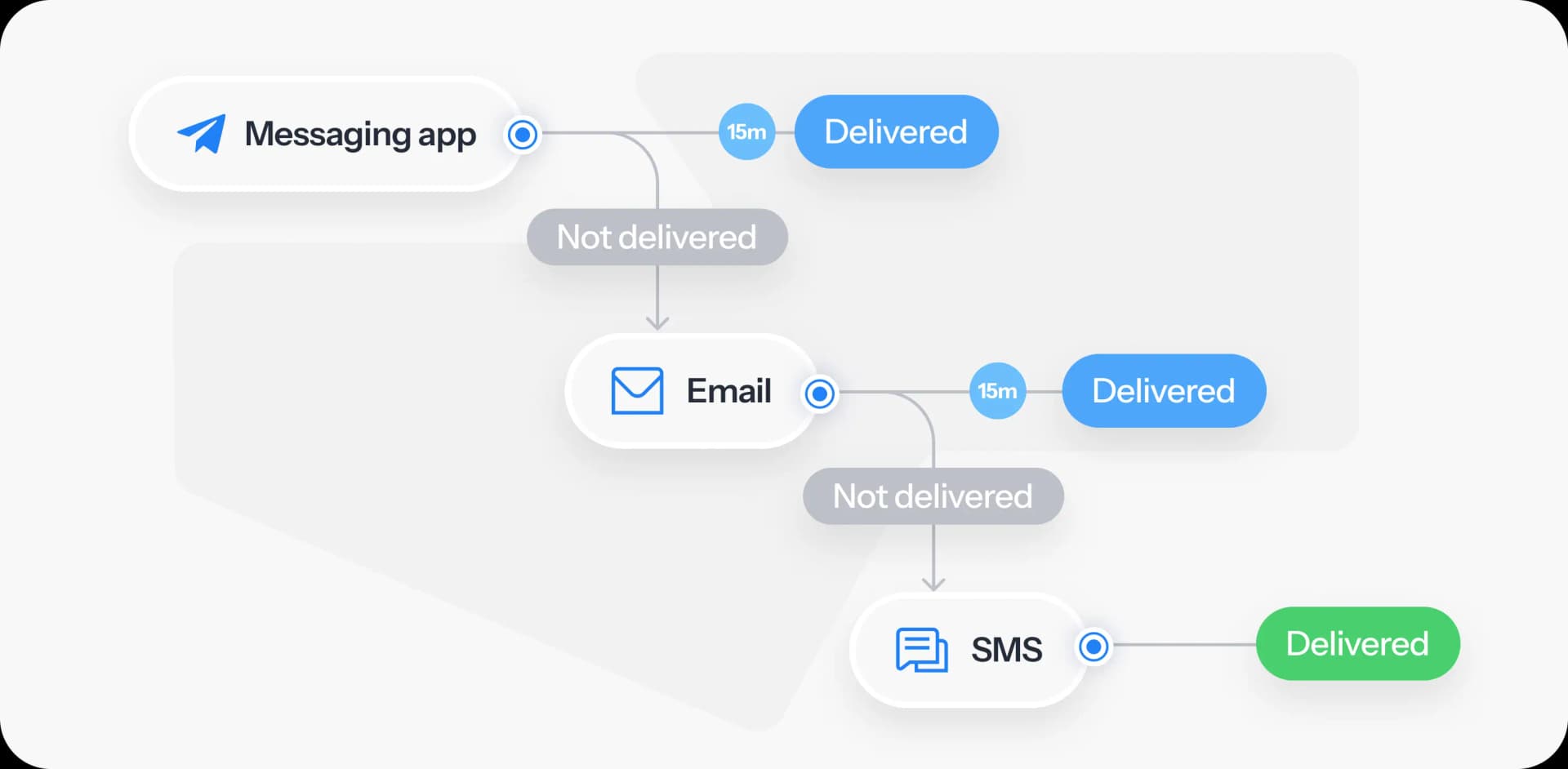
The length of the time frame reflects the priority of the message type. For marketing campaigns where speed isn’t critical, a 15-minute frame gives app-based channels time to deliver even if the user’s phone is temporarily offline. This reduces the share of traffic that ever reaches the more expensive SMS step. For time-sensitive flows, shorter frames of 5-15 seconds are standard—every extra second increases the risk of losing the user mid-session.
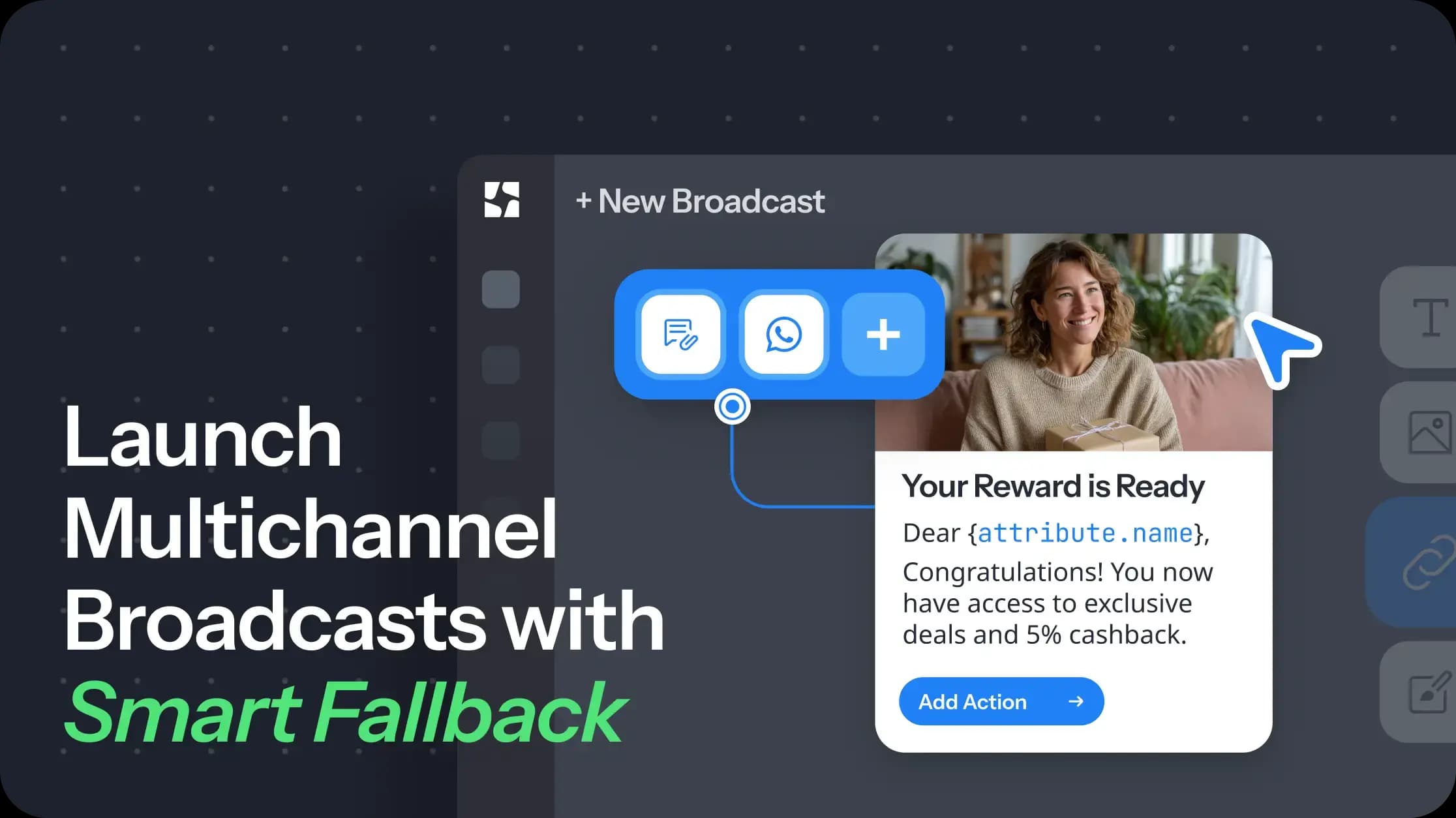
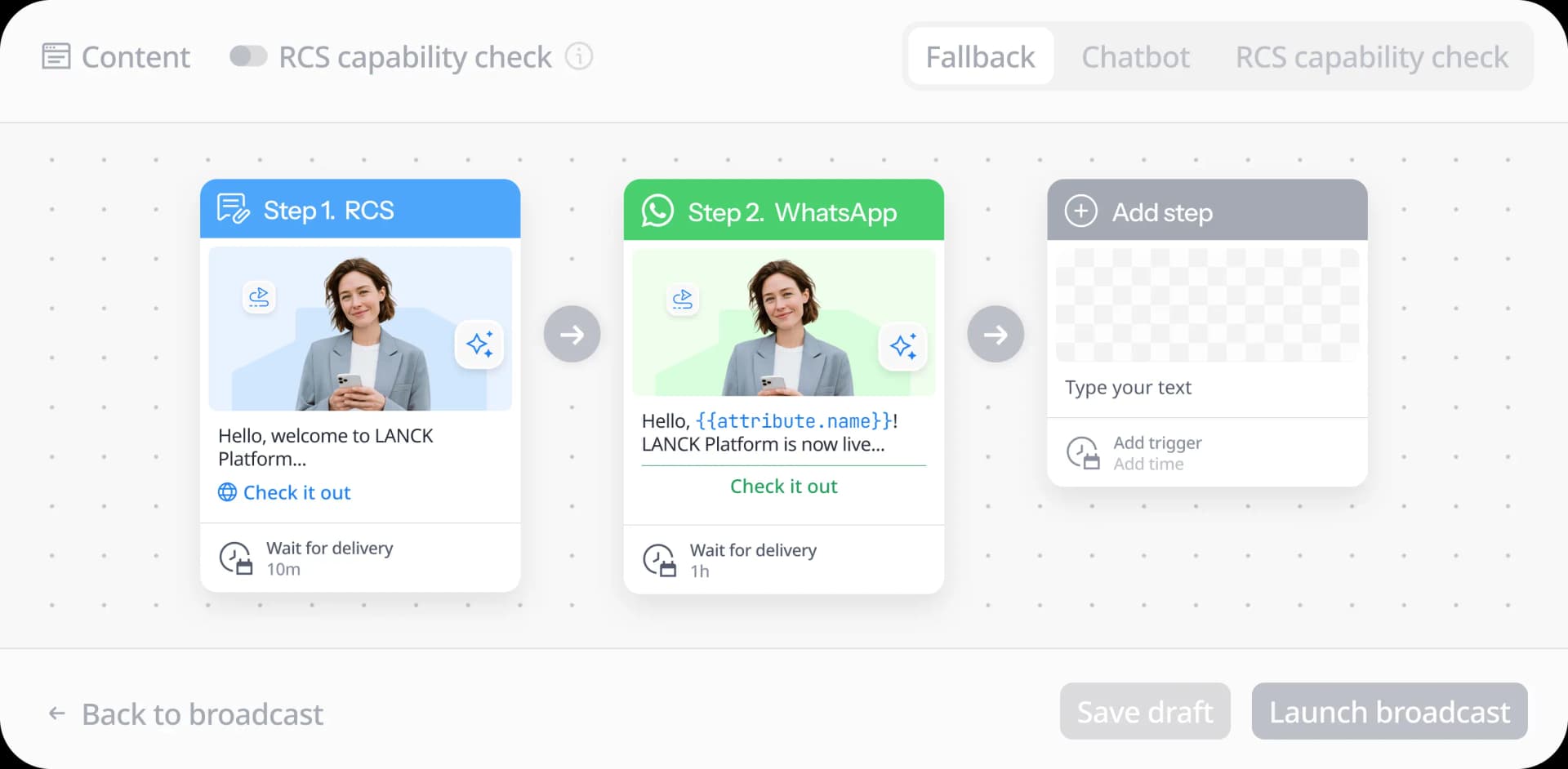
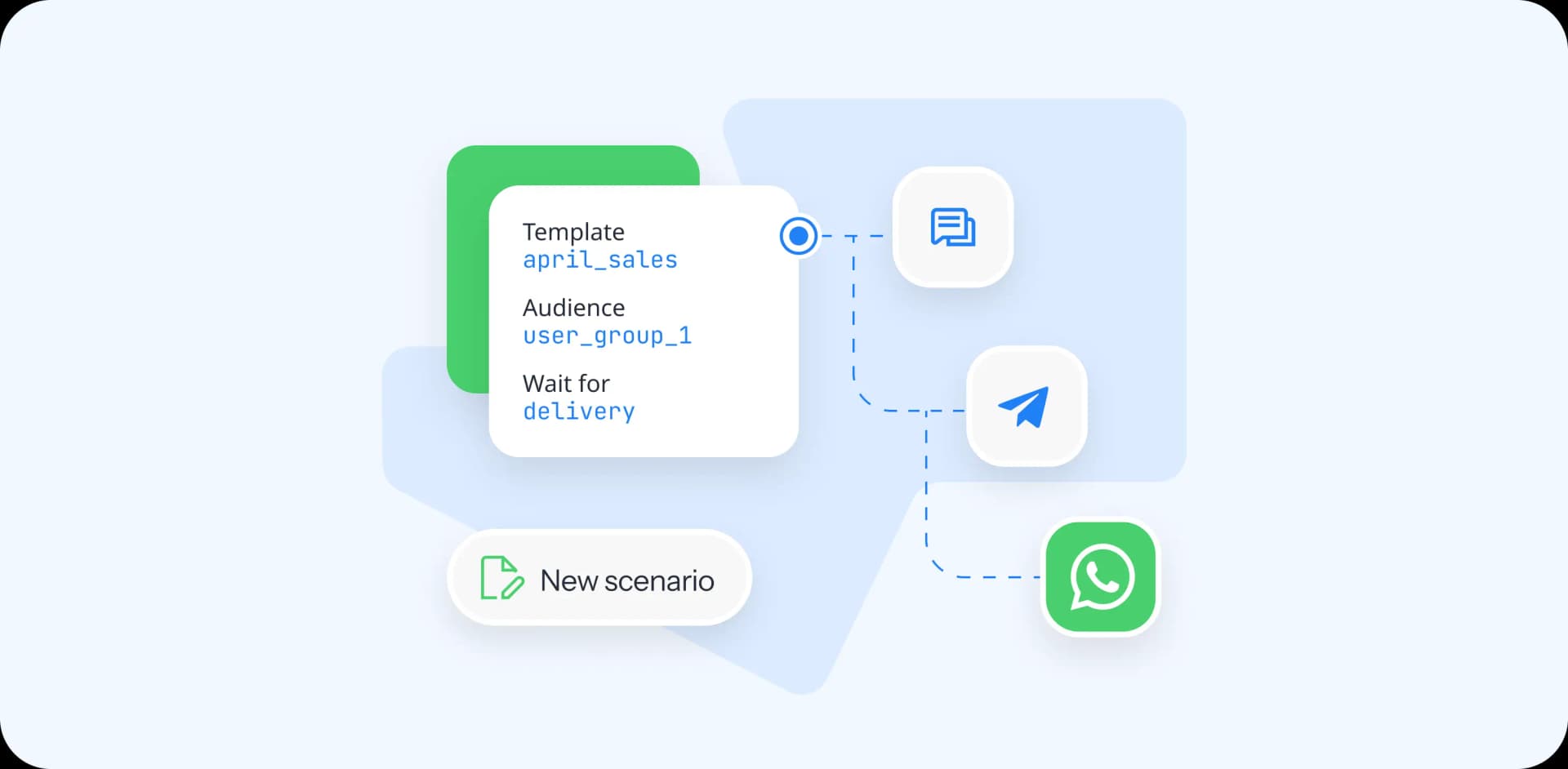
LANCK cascade scenarios can be built through the dashboard UI or configured programmatically via the API. Each channel in the sequence supports its own message content and personalization parameters—so the WhatsApp version of a message can use rich text and emojis, while the SMS fallback stays within the 160-character limit.
Pro Tip:
The Double-Delivery Risk
One edge case worth understanding: if the time frame at a cascade step is set too short, there's a risk of double delivery. The original message may arrive after the cascade has already moved to the next channel—meaning the user gets two messages, and you're billed for both.
This is particularly relevant for Telegram and WhatsApp, which have defined time-to-live (TTLs) values of approximately five minutes. Configuring timeout frames thoughtfully for each use case is an essential aspect of good cascade design.
Cascade Messaging vs Multichannel Communication vs Omnichannel Communication
| Approach | How it works | Channel awareness | Best suited for |
|---|---|---|---|
| Cascade / Fallback | Sequential delivery with automatic forwarding to the next channel if the current one doesn't confirm delivery within a set frame. | Delivery-status-aware—each step is conditioned on the previous result. | Authentication, time-sensitive transactional messages, and cost optimization at scale. |
| Multichannel | Messages sent independently across multiple channels simultaneously or in separate campaigns, with no coordination between them. | None—channels operate in isolation. | Broad-reach campaigns where delivery on any channel counts and there is no fallback dependency. |
| Omnichannel | Unified delivery layer with shared context across all channels. Routing adapts based on user history, behavior, and real-time delivery data. | Full—channels share data, user profiles, and delivery history. | Personalized customer engagement across the full lifecycle, with a consistent experience at every touchpoint. |
Multichannel communication means being present on more than one channel—but each operates independently. A company running an SMS campaign and a messaging app campaign to the same list without any coordination between them is using multichannel messaging.
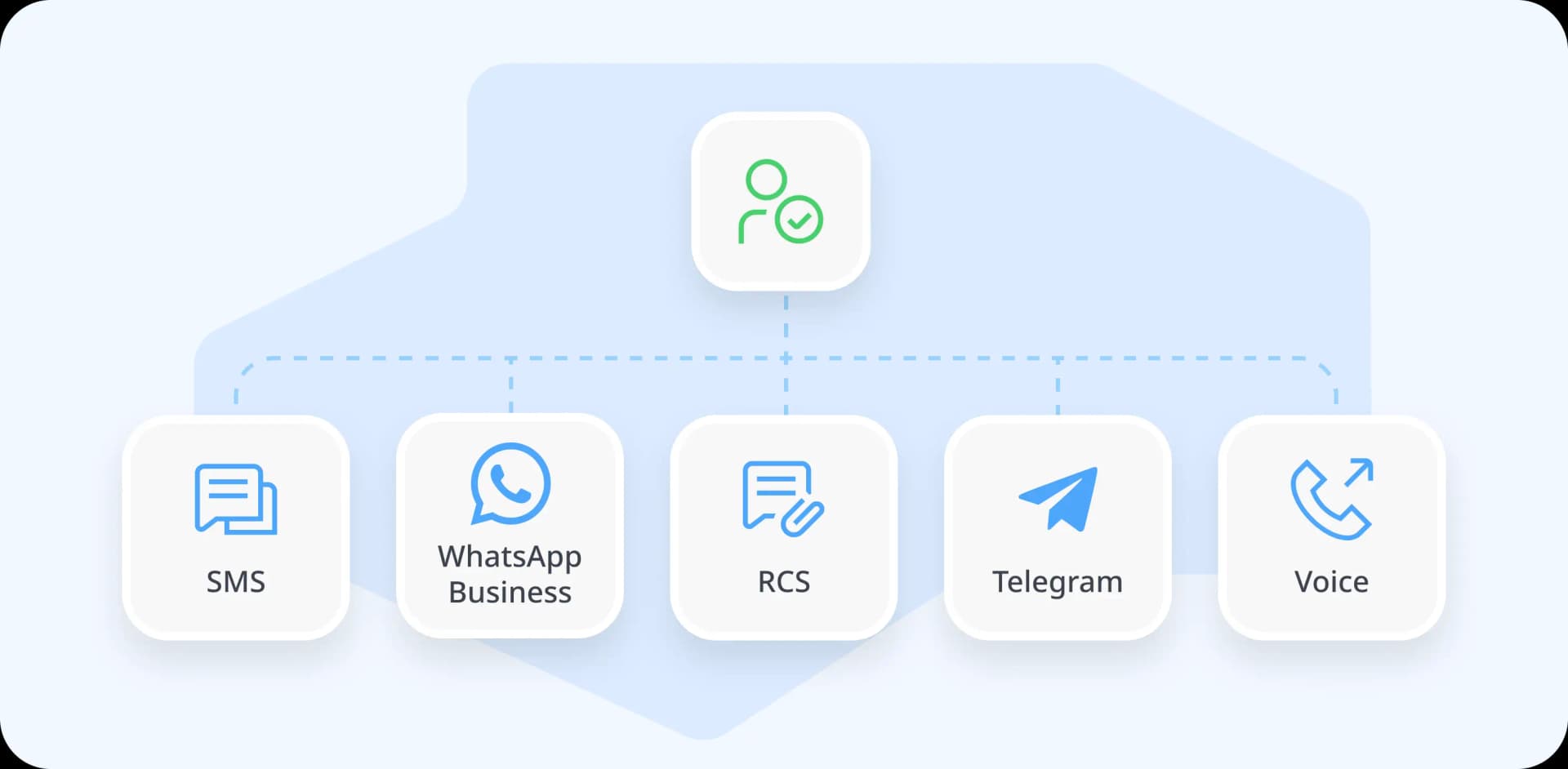
Omnichannel communication goes further, creating a unified view of each customer across all channels. Cascade delivery is often built into omnichannel architectures as the mechanism that handles fallback—but omnichannel brings in additional intelligence about user preferences, history, and context that a basic cascade sequence doesn't have.
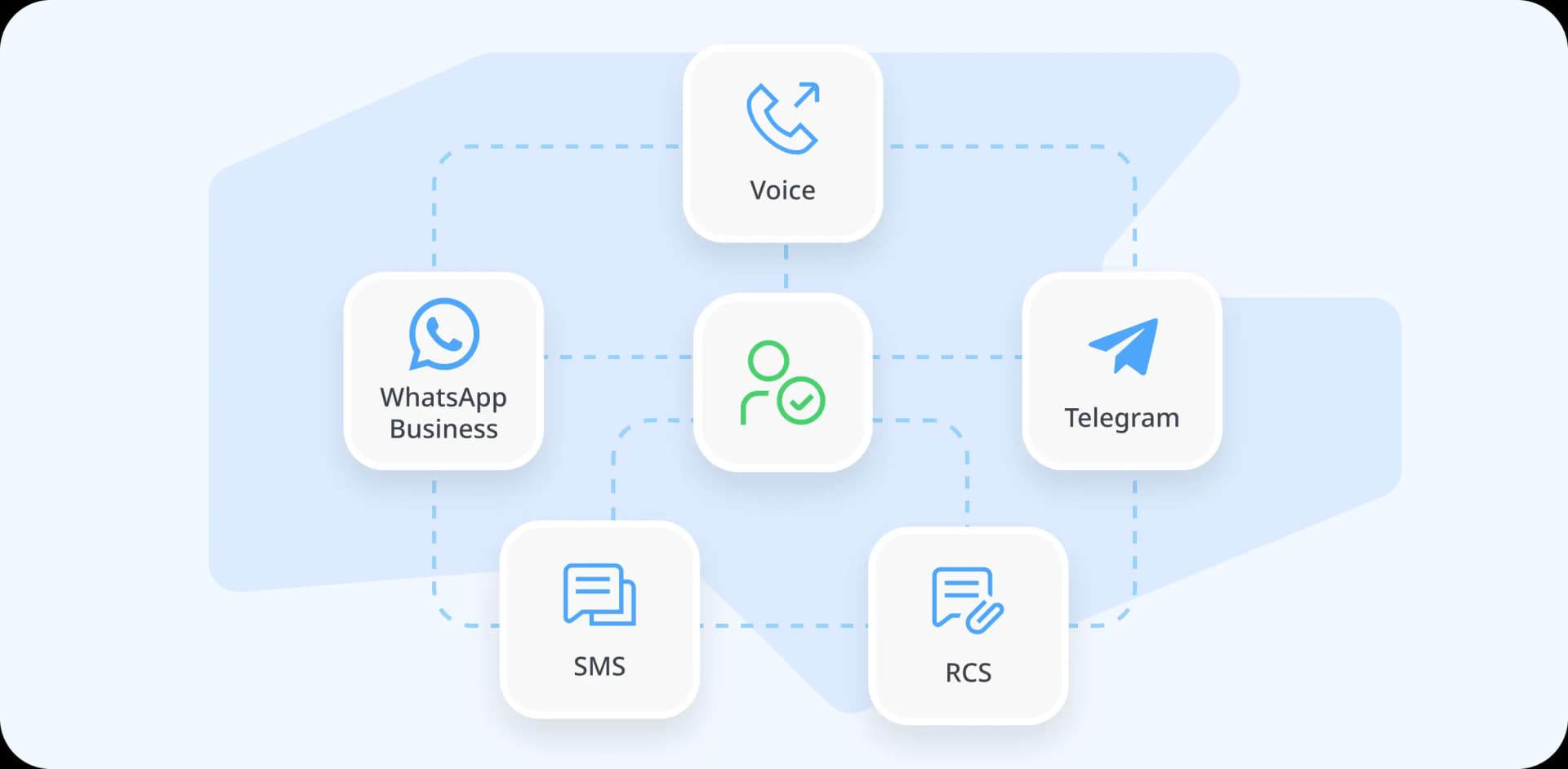
Cascade communication (also called sequential messaging or multichannel fallback, or failover messaging) adds a logic layer: channels are ordered, and the system only moves to the next step when the previous one hasn't confirmed delivery. Channel cascade is particularly effective for transactional messages where delivery confirmation is critical.
See how LANCK handles communication
across every step of the user journey, including onboarding and step-up authentication.
Benefits of Cascade Messaging for Customer Communication
Delivery Reliability
No single channel reaches every user under every condition. SMS may be congested on a carrier network. WhatsApp requires an active data connection. RCS isn't yet universally supported across handsets. Channel cascading eliminates the single point of failure that comes with committing to just one option.
For authentication flows, this has a direct business impact: a missed OTP means a user can't log in, complete a purchase, or verify their account. Worse still, the friction from one failed message can lead to session abandonment. Automatic channel fallback reduces this risk without adding friction to the user experience—the cascade runs invisibly in the background.
15-20% Cost Reduction
Cascade delivery also changes the cost structure of outbound messaging. Instead of sending every message through SMS—typically one of the more expensive channels—businesses can lead with lower-cost options like WhatsApp, RCS, or email. If the majority of messages are successfully delivered at the first step, the more expensive SMS fallback is only triggered for the minority that need it.
At scale, this has a meaningful effect on cost per contact—saving up to 15-25%. The channel cascade lets businesses optimize for both delivery rate and budget, without choosing between them.
For more insight into how businesses are applying cascade logic across different customer scenarios, see how delivery channel strategies map to real-world use cases.
Common Cascade Messaging Use Cases
Marketing Campaigns
For promotional messaging, cost efficiency is the primary driver. A cascade scenario starts with a lower-cost channel—WhatsApp, RCS, or email—and falls back to SMS only after a 10–15 minute timeout frame. Most messages are delivered at the first step, so the more expensive SMS fallback is triggered only for the share that needed it. This keeps the average cost per contact well below a purely SMS-based approach while still guaranteeing reach. For teams planning large multichannel broadcast campaigns, cascade delivery is a natural fit.
See our other guides for deeper context on how authentication flows are structured in fintech and banking KYC, or how SMS-based authentication fits into a broader channel strategy—including its role in online gambling and iGaming platforms and general user authentication flows.
Transactional Notifications
Order confirmations, payment receipts, and shipping updates don't require the urgency of OTP delivery, but they still require safe and reliable confirmation. A cascade approach ensures the user receives the notification on whichever channel is available, without requiring a choice between channel coverage and cost control.
Appointment and Service Reminders
Healthcare providers, hospitality businesses, and logistics operators use cascade messaging to confirm bookings and reduce no-shows. Starting with a lower-cost channel and using SMS as the final fallback maximizes reach across diverse user populations, including those without smartphones or reliable data access.
Choosing a Platform for Cascade Messaging
A cascade communications scenario is only as reliable as the platform running it. A few things are worth evaluating carefully before selecting a provider.

The broader the channel stack, the more flexibility you have to sequence channels in a way that's optimized for your audience and geography. LANCK supports SMS, RCS, WhatsApp, and email via the dashboard. Telegram and Viber are available through the API, along with Voice channels.

Trigger flexibility. Not all fallback scenarios use the same conditions. A good platform should support multiple trigger types—delivery errors, timeouts, and read status conditions—and allow different message content at each step rather than repeating the same text across every channel.
Without per-channel delivery data, there's no way to evaluate whether a cascade sequence is performing as intended. LANCK's dashboard shows the delivery rate for each channel step across active campaigns, giving teams clear visibility into where messages succeed and where they fail.
For teams integrating cascade logic directly into their product—authentication flows, real-time notifications—API-based cascade configuration is essential. LANCK's API supports full cascade scenario setup including per-channel content and configurable retry frames.
Future of Cascade Messaging: Intelligent Communication Orchestration
Cascade messaging as it exists today is rule-based: if condition X is met, move to channel Y. The next evolution is predictive orchestration—where the system uses historical delivery data to sequence channels differently for each user, before the first message is even sent.
Instead of starting every user with WhatsApp and falling back to SMS, a predictive system recognizes that a specific user has never received a WhatsApp message successfully and starts with SMS instead. Or it identifies that users in a particular region have consistently higher delivery rates on RCS during certain hours and routes messages accordingly
This kind of adaptive channel cascade is already emerging in platforms with strong analytics layers. The infrastructure is in place—what's developing is the intelligence layer on top. As delivery data accumulates across millions of messages and diverse user populations, cascade scenarios become increasingly self-optimizing.
The broader shift is toward communication orchestration as a managed function—not just sending messages, but continuously learning which channel, sequence, and timing produce the best outcome for each user segment.
Bottom Line
Cascade messaging addresses a straightforward problem: no single channel reaches every user reliably, and betting your communication strategy on a single channel is a risk you don't need to take. By sequencing channels and automating fallback based on delivery status, cascade communication improves both reliability and cost efficiency—without adding friction for users or complexity for the operations team.
The approach scales from simple two-step fallback configurations to sophisticated multichannel sequences tailored by region, user behavior, and message type. What makes it work in practice is a platform that handles the orchestration, gives you visibility into delivery performance at each step, and lets you adjust the logic without rebuilding the system from scratch
FAQ
What is cascade messaging?
Cascade messaging is a delivery strategy where a message moves through a predefined sequence of channels—automatically switching to the next one if delivery isn't confirmed on the current channel within a set time frame. It's also referred to as fallback messaging, sequential messaging, or channel fallback.
How is cascade messaging different from multichannel messaging?
Multichannel messaging means using more than one channel, but each operates independently—messages may be sent on multiple channels simultaneously with no coordination between them. Cascade messaging adds a logic layer: channels are ordered, and each step only triggers if the previous one didn't return a delivery confirmation. The channels are linked, not parallel.
What triggers the fallback to the next channel in a cascade?
Three types of triggers are typically supported: a delivery error returned by the operator or vendor, the absence of a delivery status within a defined time frame (timeout), or a specific status—like "read" or "seen"—that wasn't returned within the expected frame. The trigger type and time frame are configurable for each step.
Which channels can be included in a cascade sequence?
This depends on the platform. LANCK's dashboard supports cascade scenarios across SMS, RCS, WhatsApp, and email. Via API, the full channel set is available: SMS, RCS, WhatsApp, Telegram, Viber, email, Flash calls, and voice OTP (Pin2Speech).
Is cascade messaging well-suited for marketing campaigns?
Yes—it’s one of the strongest applications. Marketing messages prioritize cost efficiency over speed, so cascade scenarios can use longer timeout frames (10–15 minutes per step). This gives lower-cost channels like WhatsApp, RCS, or email enough time to deliver before the cascade falls back to SMS. The result is broad reach at a meaningfully lower average cost per contact.
How does cascading delivery reduce messaging costs?
By leading with lower-cost channels—WhatsApp, RCS, or email—and only falling back to more expensive channels like SMS when needed. If most messages are successfully delivered at the first step, the average cost per message drops significantly compared to routing everything through SMS.
Can different message content be used at each step in the cascade?
Yes. A well-designed cascade platform allows different content and formatting at each channel step. A WhatsApp message might use rich formatting and images, while the SMS fallback is condensed to fit within character limits. LANCK supports per-channel content and personalization parameters at each step.
What happens if a message is delivered after the cascade has already moved to the next channel?
This is the double-delivery risk. If the timeout frame is set too short, the original message may arrive after the cascade has moved to the next step—resulting in the user receiving two messages and the sender being billed twice. Setting timeout frames appropriately for each channel and use case is part of good cascade design.
How do I set up cascade messaging with LANCK?
Cascade scenarios can be configured through LANCK's dashboard interface—without any coding—or via API for teams integrating cascade logic into their product. Both options support per-channel content, configurable trigger conditions, and delivery analytics.
Is cascade messaging the same as omnichannel communication?
Not exactly, but they're related. Cascade messaging is a delivery mechanism—it handles automatic channel fallback based on delivery status. Omnichannel communication is a broader strategy that creates a unified customer experience across all channels, using shared data and user history to adapt routing over time. Cascade delivery is often built into omnichannel architectures as the fallback layer.