Fintech and Banking: User Authentication Methods and Channels for KYC and User Verification

Blog
KYC is no longer just a compliance checkbox. It's the front door to your product—and how you handle identity verification directly shapes whether a user completes onboarding or drops off. This guide breaks down every major authentication method, compares delivery channels, and identifies what works for different fintech segments—from neobanks to crypto exchanges.
Making authentication and verification work reliably at scale requires the right delivery infrastructure. LANCK is a CPaaS solution built specifically for this: it delivers one-time passwords (OTPs) and verification messages across SMS, voice, WhatsApp, and other channels. Its built-in AI fraud detection analyzes over 300 behavioral parameters to block artificially inflated traffic and ensure only legitimate messages reach real users.
If one channel fails, the platform automatically cascades to the next—so your verification flow keeps moving even when networks don't cooperate. It integrates via API in minutes and provides real-time dashboards to monitor channel performance across every market you operate in.
What Is KYC in Fintech and Banking, and Why Authentication Matters
Know Your Customer (KYC) is the foundational process financial institutions use to verify that users are who they claim to be. In the context of fintech identity verification, it encompasses collecting identity documents, cross-referencing data, and confirming a person's presence through authentication signals—before granting access to financial products.
Regulatory frameworks such as the EU's AML directives, the US Bank Secrecy Act, and FATF recommendations require financial institutions to perform identity verification in banking as a condition of operation. Failing to comply carries significant fines, reputational damage, and licensing risks.
Beyond compliance, authentication sits at the heart of trust. A bank or fintech that makes verification slow or frustrating will lose users during onboarding. One that makes it weak invites fraud. The goal is to find the right method for each moment in the user journey—and deliver it through the right channel.
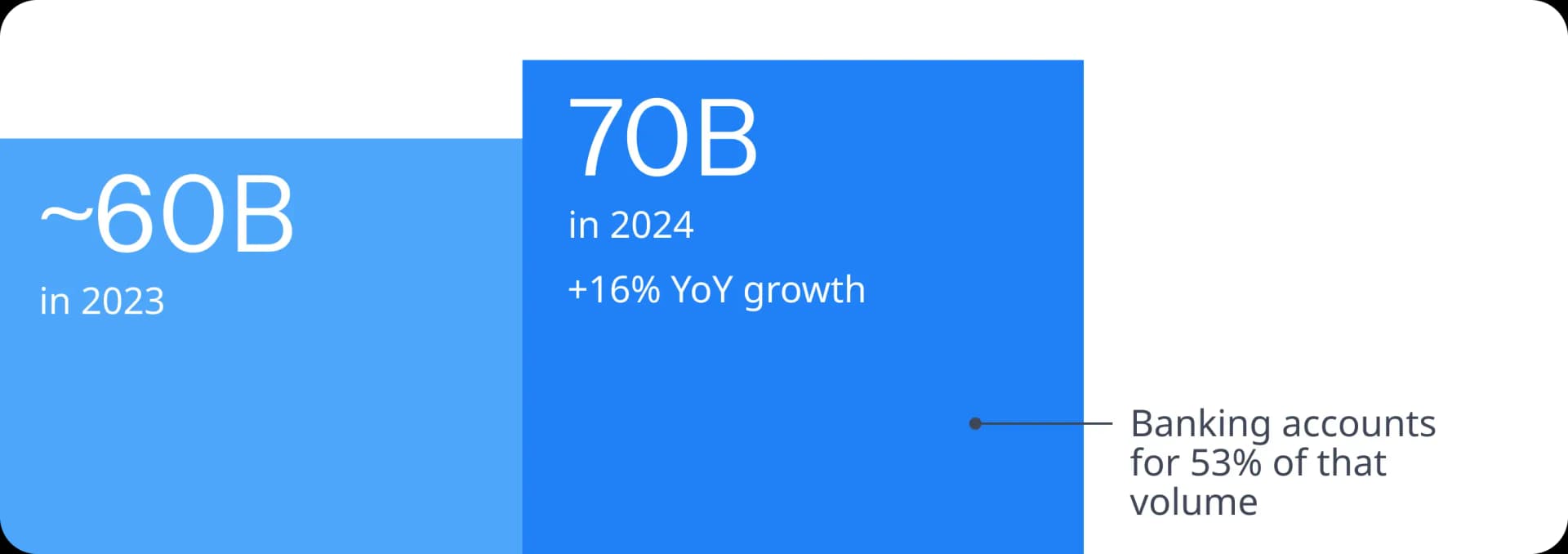
Infographic showing the growth of digital identity verification checks.
Worth noting:
According to Juniper Research, the number of digital identity verification checks surpassed 70 billion in 2024—up 16% year-on-year, with banking accounting for 53% of that volume.
How Authentication Works: From Onboarding to Verification
Authentication in fintech doesn't just happen once. It's layered across the user lifecycle—starting with onboarding (KYC), continuing through every login, and escalating for sensitive actions like large transfers or account changes.
At onboarding, identity verification systems and methods typically involve document capture, facial biometrics, and a one-time verification step via SMS or email. Once an account is active, authentication shifts to ongoing factors—passwords, PINs, OTPs, biometrics, or behavioral signals—depending on the risk level of the requested action.
Modern fintech platforms also apply step-up authentication: a low-risk login might require just a fingerprint, while initiating a wire transfer triggers an additional OTP via SMS or voice call. This tiered model balances security with user experience, reducing unnecessary friction at low-risk touchpoints.

See how LANCK handles communication
across every step of the user journey, including onboarding and step-up authentication.
Core Authentication Channels
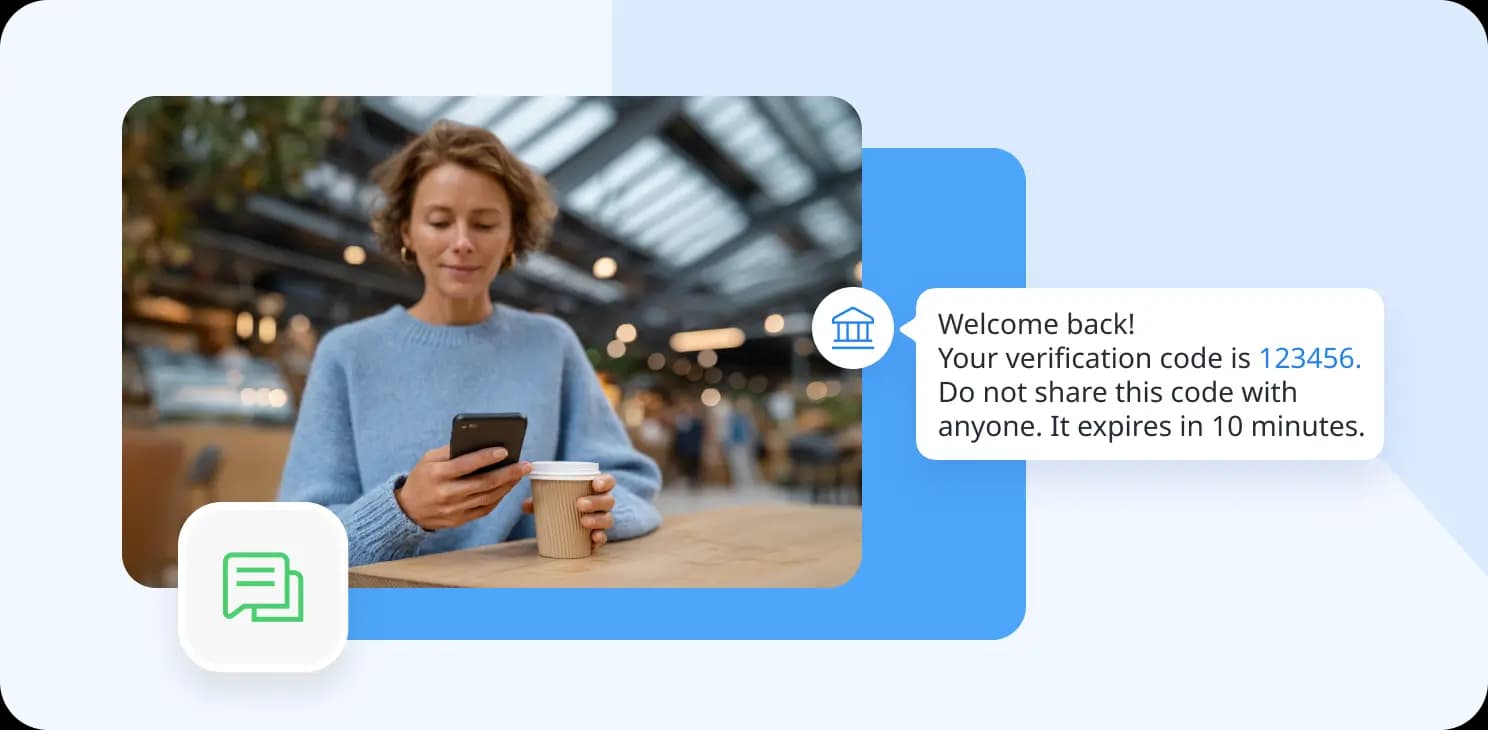
SMS Authentication for KYC and User Verification
SMS one-time passwords (OTPs) remain the dominant channel for KYC fintech workflows. They're universal—a mobile number is the primary identifier almost every user already has—they also work on any device without requiring additional app installations.
SMS OTPs are used during onboarding to confirm a phone number, as a second factor during login, and as part of transaction verification. Delivery is fast—typically under 10 seconds via a direct route—and the channel requires zero setup on the user's side.
The tradeoffs include SIM-swap fraud and SS7 vulnerabilities. While these risks are present, they are often overstated for the average user. SIM-swapping occurs when an attacker convinces a carrier to transfer a victim's phone number to a SIM card they control, allowing them to intercept any OTP sent to that number. SS7 is an older telecom signaling protocol with known weaknesses that, in theory, allow the interception of SMS messages in transit. In practice, both SIM-swap and SS7 exploitation require either social engineering skills or access to telecom infrastructure.
For most consumer fintech applications, SMS remains a practical and well-understood channel. It works best when backed by intelligent routing that maximizes delivery rates and minimizes latency, and AI-powered fraud detection that blocks artificial traffic before it reaches real users.
LANCK delivers OTPs through high-quality routes and monitors performance in real time, catching silent failures before they impact onboarding conversion.
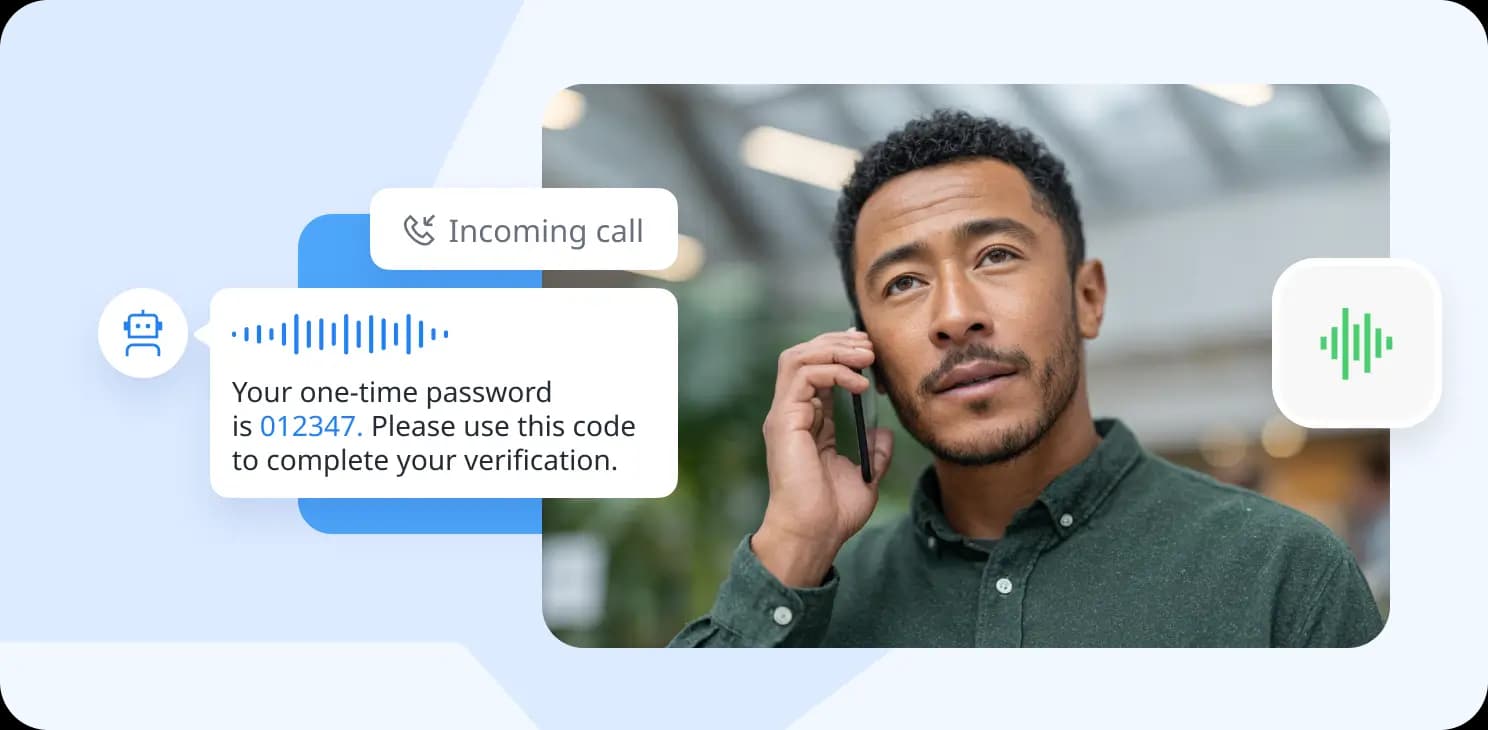
Voice Calls and OTP Calls for Authentication
When an SMS doesn't arrive—whether due to a network issue, a prepaid SIM limitation, or a user with restricted data access—a voice call can deliver the OTP via automated text-to-speech.
Another voice-based option is the flash call: the user receives a zero-duration call and enters the last digits of the incoming number as the verification code. No interaction is required—just a missed call to complete verification.
Both are standard in fintech ID verification flows. They’re primarily used in specific contexts: serving older demographics, operating in markets where SMS deliverability is inconsistent, and high-value transaction verification where a human-like interaction adds a layer of assurance.
When managed properly, voice can serve as a reliable primary authorization channel.
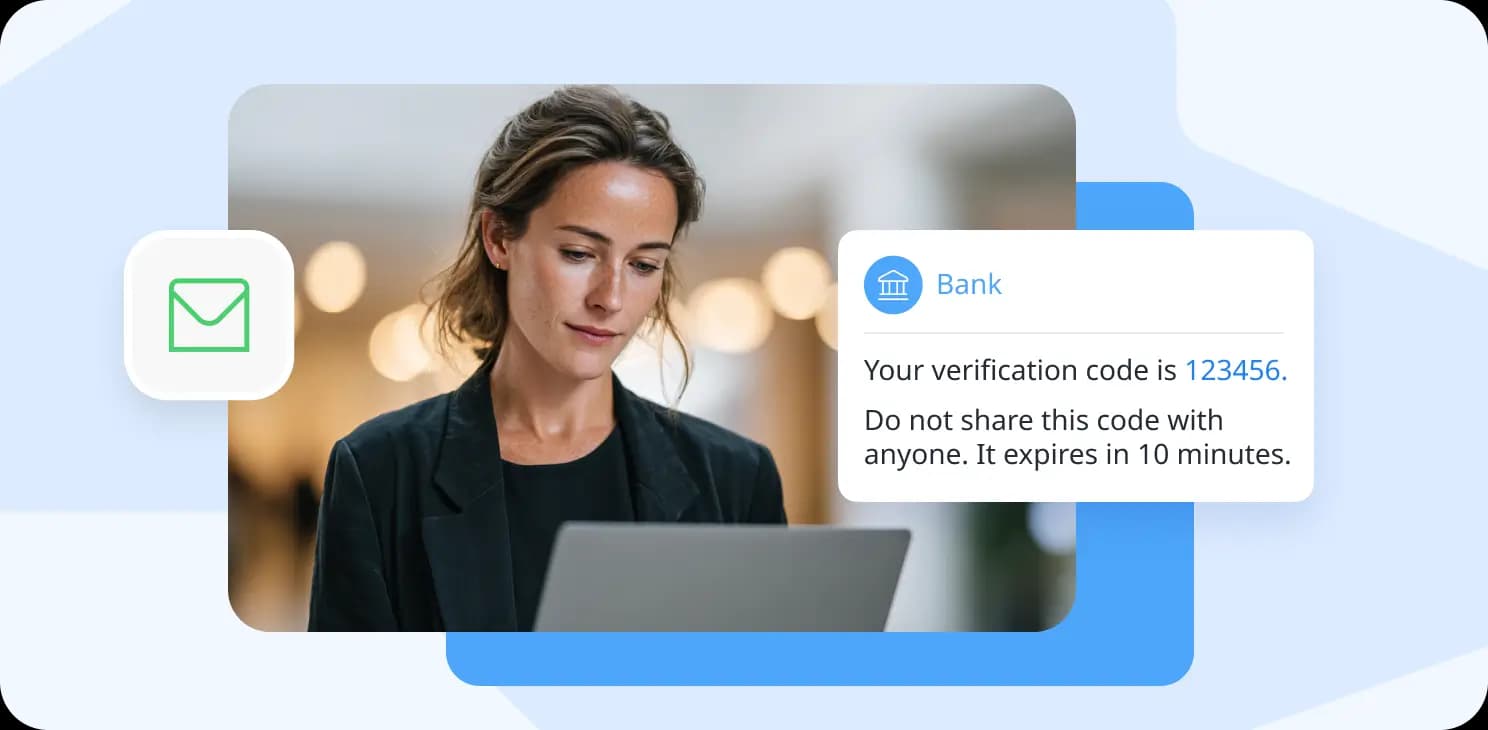
Email-Based Authentication
Email remains a strong channel for account-level communications and verification, particularly for document submission confirmations, account activation links, and password reset flows.
However, as a primary authentication factor, email has limitations in terms of speed and security: deliverability can be affected by delays or spam filters, and email accounts are frequently targeted in phishing attacks. Consequently, most fintech identity verification flows use email mostly as a supporting channel.
Email-based authentication works well in onboarding welcome sequences, compliance document delivery, and as a secondary verification channel when a user's primary device is unavailable. For KYC banking purposes, email also serves as a durable record of communication—providing a vital regulatory audit trail.
Messaging Apps and Chat-Based Authentication
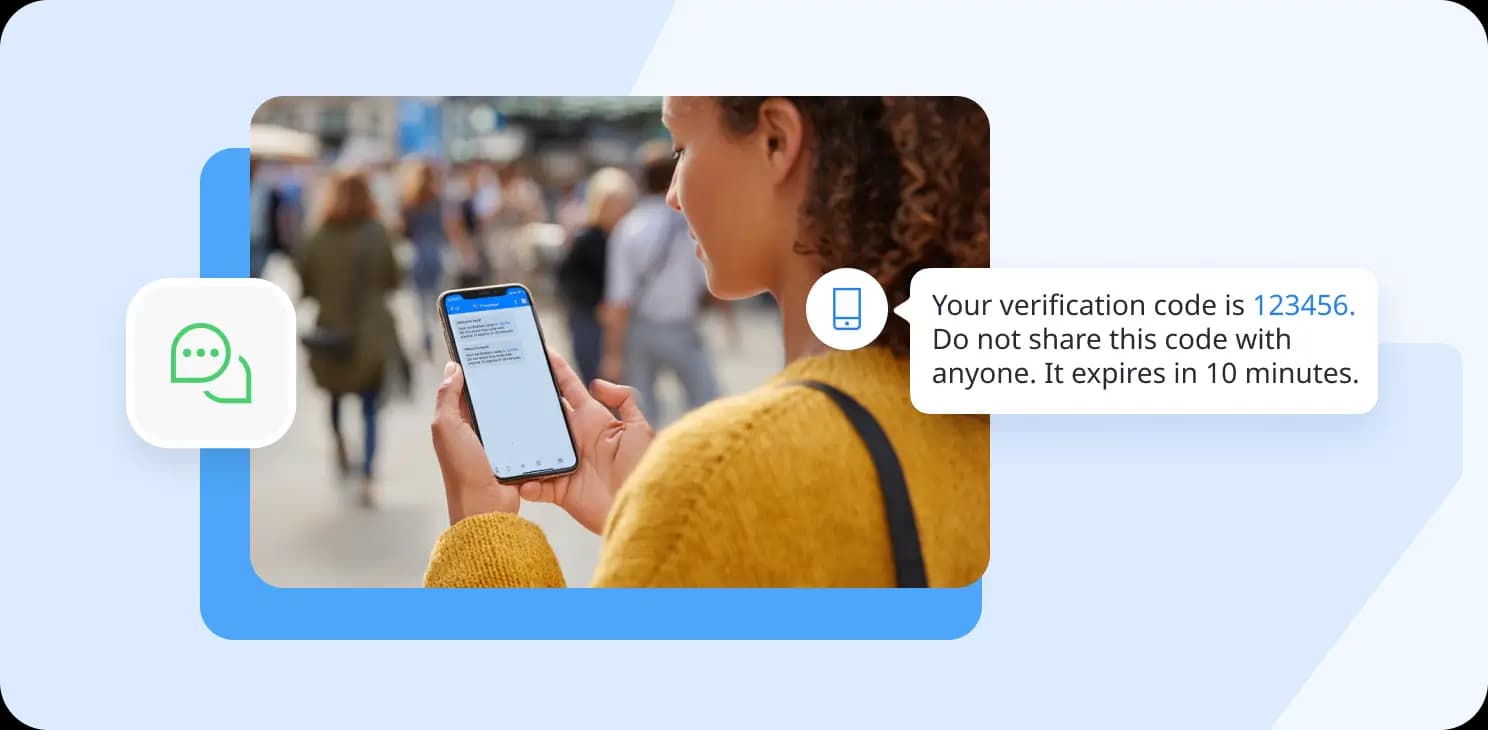
Chat-based authentication over messaging applications is gaining ground, particularly in markets where these apps have high daily active usage—such as Brazil, India, and Southeast Asia.
Delivering an OTP via WhatsApp or Telegram offers a key advantage over SMS: messages arrive within a verified business account thread or via a dedicated bot. This significantly reduces the risk of spoofing and increases user trust. Delivery receipts also provide businesses with a more reliable signal of whether the message was actually delivered and seen.
RCS (Rich Communication Services) is emerging as a native upgrade to SMS, supporting read receipts, branded sender identities, and richer message formats without requiring a third-party app. As carrier support for RCS expands, it's likely to play a larger role in fintech communication and authentication flows.
Multichannel Authentication: Benefits and Limitations
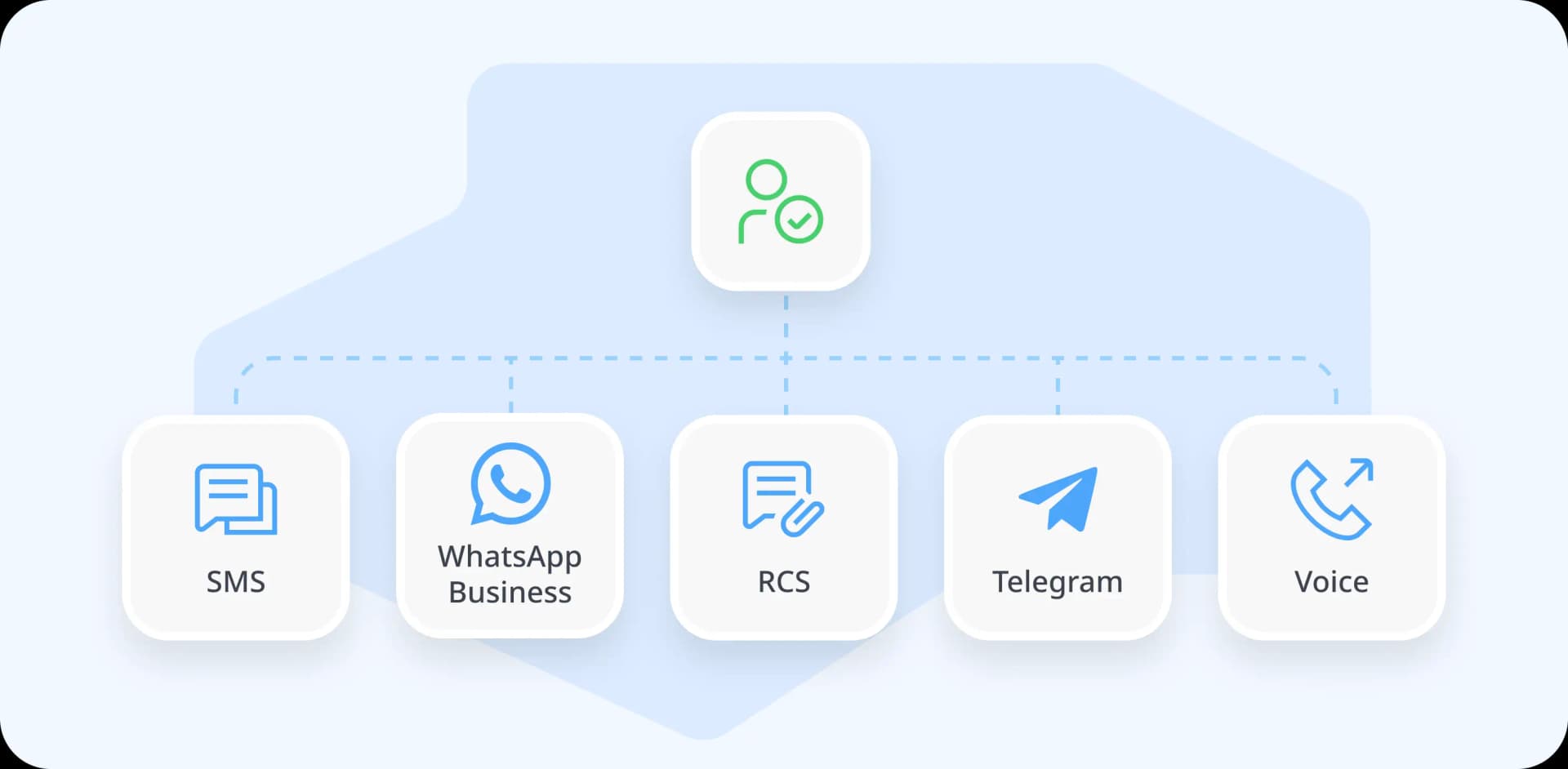
Multichannel authentication refers to using more than one channel to deliver verification—for example, sending an OTP via SMS while having a voice fallback ready. It is as much a reliability strategy as it is a security one.
The primary benefit is coverage. Different users have different device capabilities, connectivity conditions, and channel preferences. A fintech serving a global user base can't rely on a single channel and expect high delivery rates across all regions. Adding a second channel significantly reduces the likelihood of verifications failing to reach the user.
The main limitation is coordination. Running multiple channels without a unified delivery layer creates fragmented data, inconsistent retry logic, and reporting blind spots. Without proper orchestration, a multichannel approach can add complexity that damages the user experience.
Omnichannel Authentication: Creating a Seamless User Experience
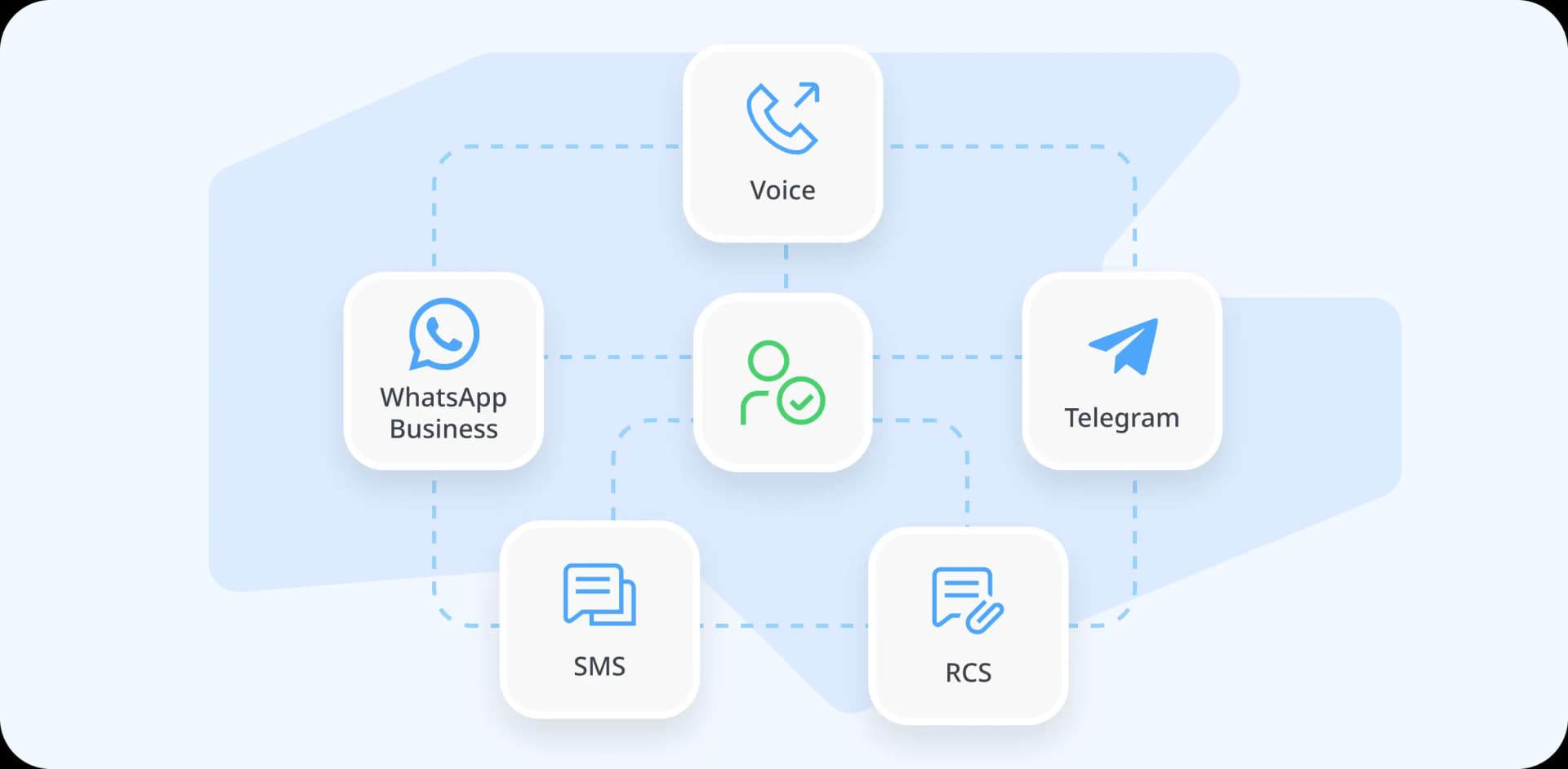
Omnichannel authentication takes multichannel coverage further by ensuring a consistent user experience across all channels. On top of that, it's intelligent about which channel to use—adapting based on user history, context, and real-time delivery data.
In practice, this means a user who has always received OTPs successfully over SMS continues using that channel. Similarly, a user who has experienced repeated SMS failures is routed to voice or WhatsApp automatically. The system adapts seamlessly—without the user ever noticing the logic—and verification rates stay high.
For KYC banking workflows, omnichannel also enables continuity across devices. A user who starts onboarding on mobile and switches to desktop can pick up exactly where they left off—the verification step follows them.
LANCK handles exactly this: it connects SMS, voice, WhatsApp, and other channels within a single orchestration layer, with real-time analytics and cascade communication logic built in.
Cascade Communication: How Multichannel Fallback Works in Practice
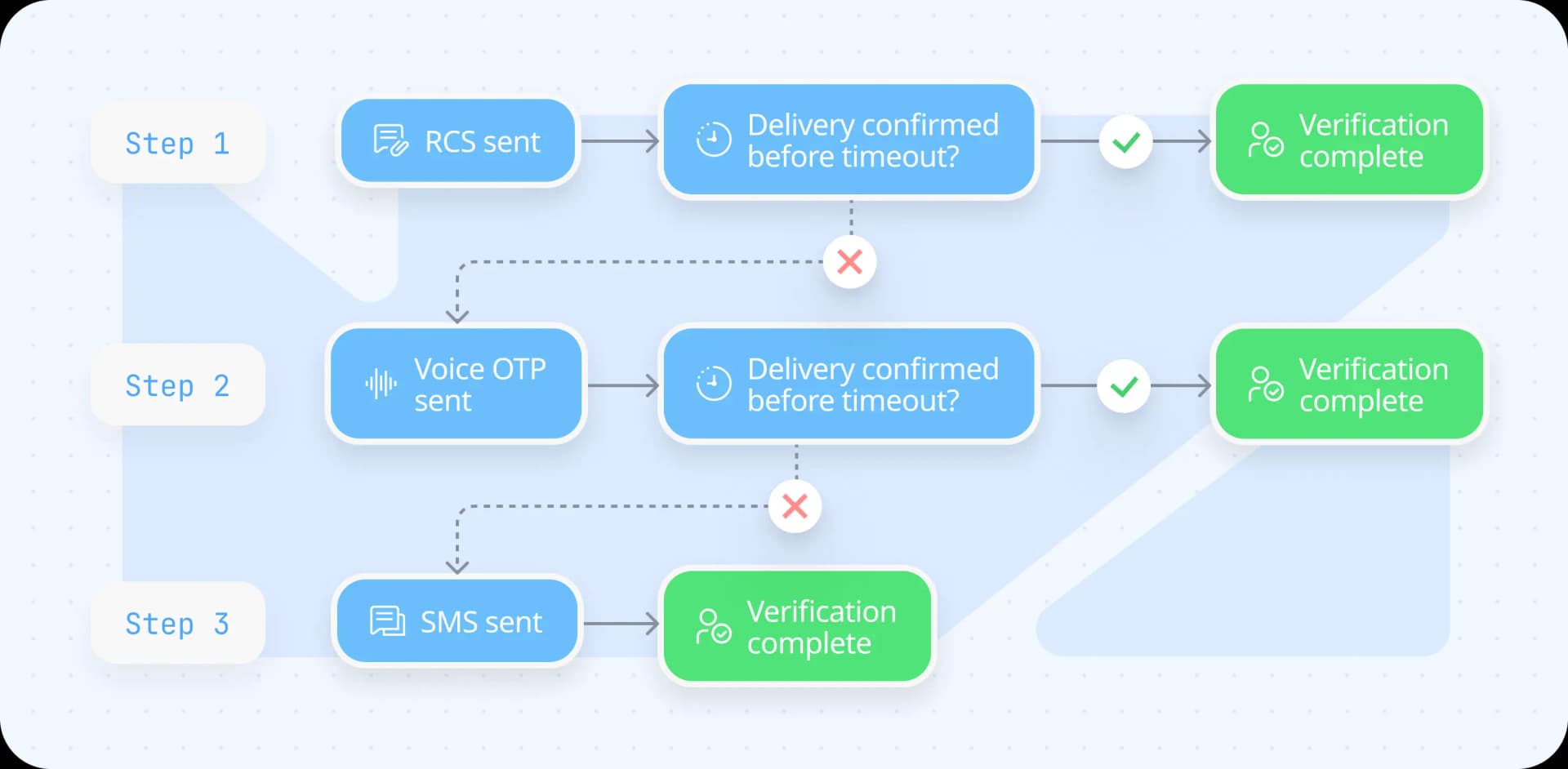
Cascade communication is the mechanism that makes omnichannel authentication reliable. The idea is straightforward: define a sequence of channels, and if delivery isn't confirmed within a set time window, automatically switch to the next one. The sequence isn't limited to two steps—a well-configured cascade can run through three, four, or more channels depending on the user's region, device, network conditions, and regulatory context.
The optimal channel order varies by use case. For a user in Brazil with high WhatsApp engagement, the cascade might start with WhatsApp, fall back to voice OTP, then SMS. For a user in a market with inconsistent data connectivity, SMS might lead, followed by a flash call, then a full voice OTP. The logic is fully configurable and runs automatically, requiring no manual intervention from the user or the operations team.
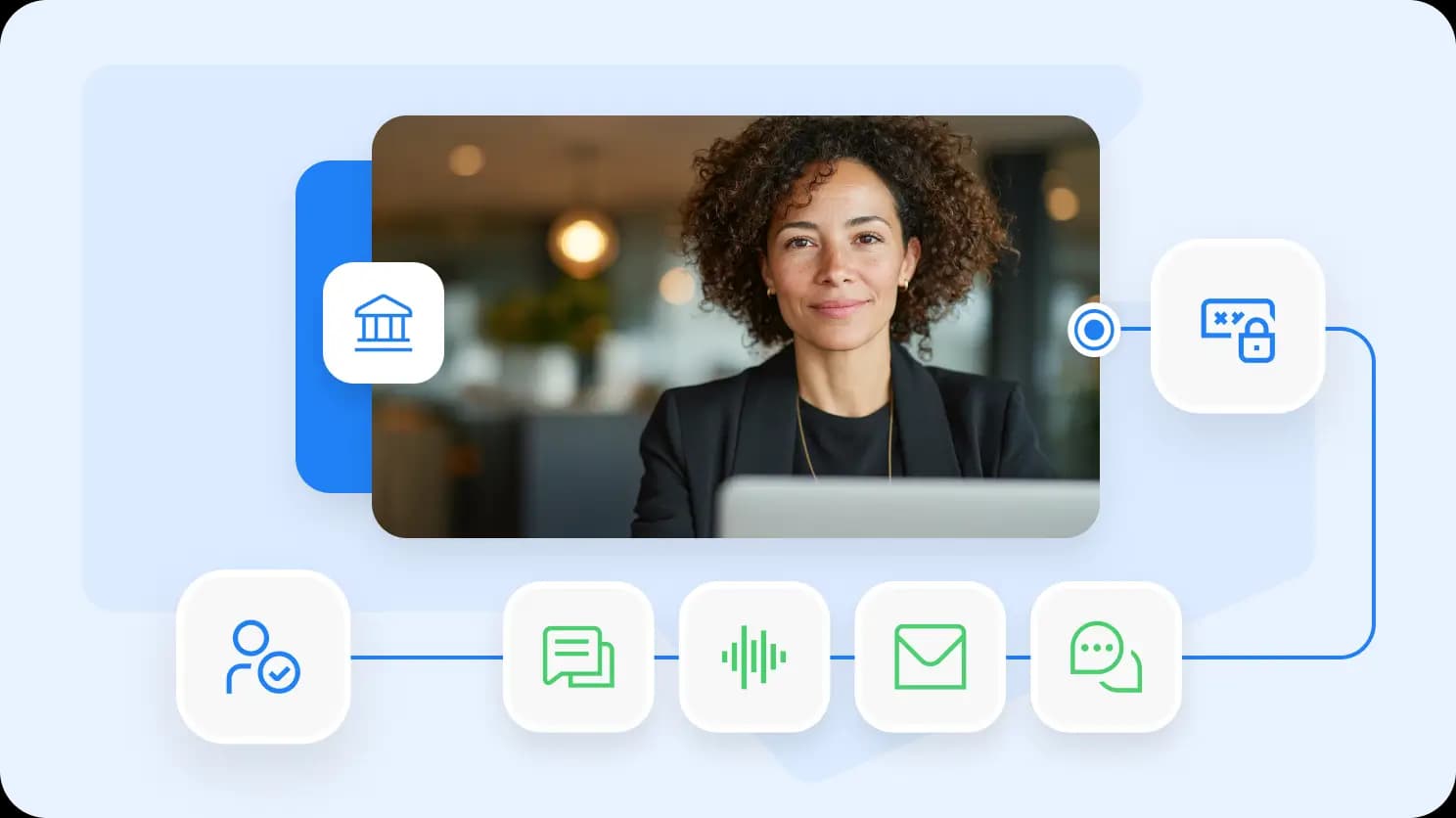
Here's what a typical three-step cascade flow looks like in practice:
Choosing the Right Authentication Channels for Fintech and Banking
There is no one-size-fits-all answer. The right channel mix depends on your user geography, regulatory requirements, risk profile, and product type. Here are the key factors to weigh.
Geography and network quality. SMS performs well in North America and Western Europe but can be unreliable in certain emerging markets. In regions with high messaging app penetration, WhatsApp or Viber may outperform SMS in both delivery and engagement.
Regulatory requirements. Some jurisdictions have specific requirements around the authentication methods acceptable for KYC fintech processes—for example, mandating strong customer authentication (SCA) for payment initiation under PSD2 in the EU.
User demographics. Voice OTP tends to perform better in markets with lower smartphone penetration or among older populations. App-based authentication suits tech-savvy users who are already comfortable with authenticator apps.
Risk tier. Low-friction channels like email work well for account activation. However, high-risk actions—including large withdrawals—warrant stronger, real-time channels like SMS or voice with delivery confirmation.
Product Specifics by Fintech Segment
Authentication requirements differ meaningfully across fintech product types. What works for a neobank isn't always the right fit for a crypto exchange or a digital wallet. Here's a simple breakdown.
| Segment | KYC Intensity | Primary Auth Channel | Typical Fallback | Key Consideration |
|---|---|---|---|---|
| Traditional Banks | High | SMS OTP | Voice OTP | Regulatory audit trails; branch-linked verification |
| Online / Neobanks | High | SMS OTP + Biometrics | Email + Voice | Full digital onboarding; minimizing abandonment is critical |
| Digital Wallets | Medium | SMS OTP or App Push | Prioritizing speed and UX-first design | |
| Crypto Exchanges | Very High | Authenticator App + SMS | Voice OTP | Global user base; high fraud risk; strict KYC tiers |
| Lending Platforms | High | SMS OTP | Voice OTP | Income/identity verification layered on top of authentication |
| BNPL / Payments | Medium | SMS OTP | WhatsApp / Email | Frictionless checkout; SCA compliance for EU |
For crypto exchanges in particular, identity verification systems and methods are among the most layered in the industry. They combine document verification, liveness detection, and multi-factor authentication at every tier, from basic trading access to high-volume withdrawal limits. Regulators in major markets now require exchange-grade KYC fintech processes comparable to those of traditional financial institutions.
Neobanks face a different challenge: they need to complete the entire fintech ID verification process digitally, with no physical branch as a fallback. That puts enormous pressure on the onboarding flow—every percentage point of drop-off during the authentication step represents a user who never becomes a customer. High-performing neobanks invest in channel orchestration to ensure OTP delivery rates stay consistently high.
Why Teams Choose LANCK
LANCK brings together everything fintech and banking teams need for authentication in one unified ecosystem:
- Omnichannel OTP delivery across SMS, voice, WhatsApp, Telegram, RCS, and more
- Native cascade logic with configurable retry windows
- AI-powered fraud detection analyzing 300+ behavioral parameters
- Real-time delivery analytics and reporting
- Straightforward API integration designed for rapid deployment
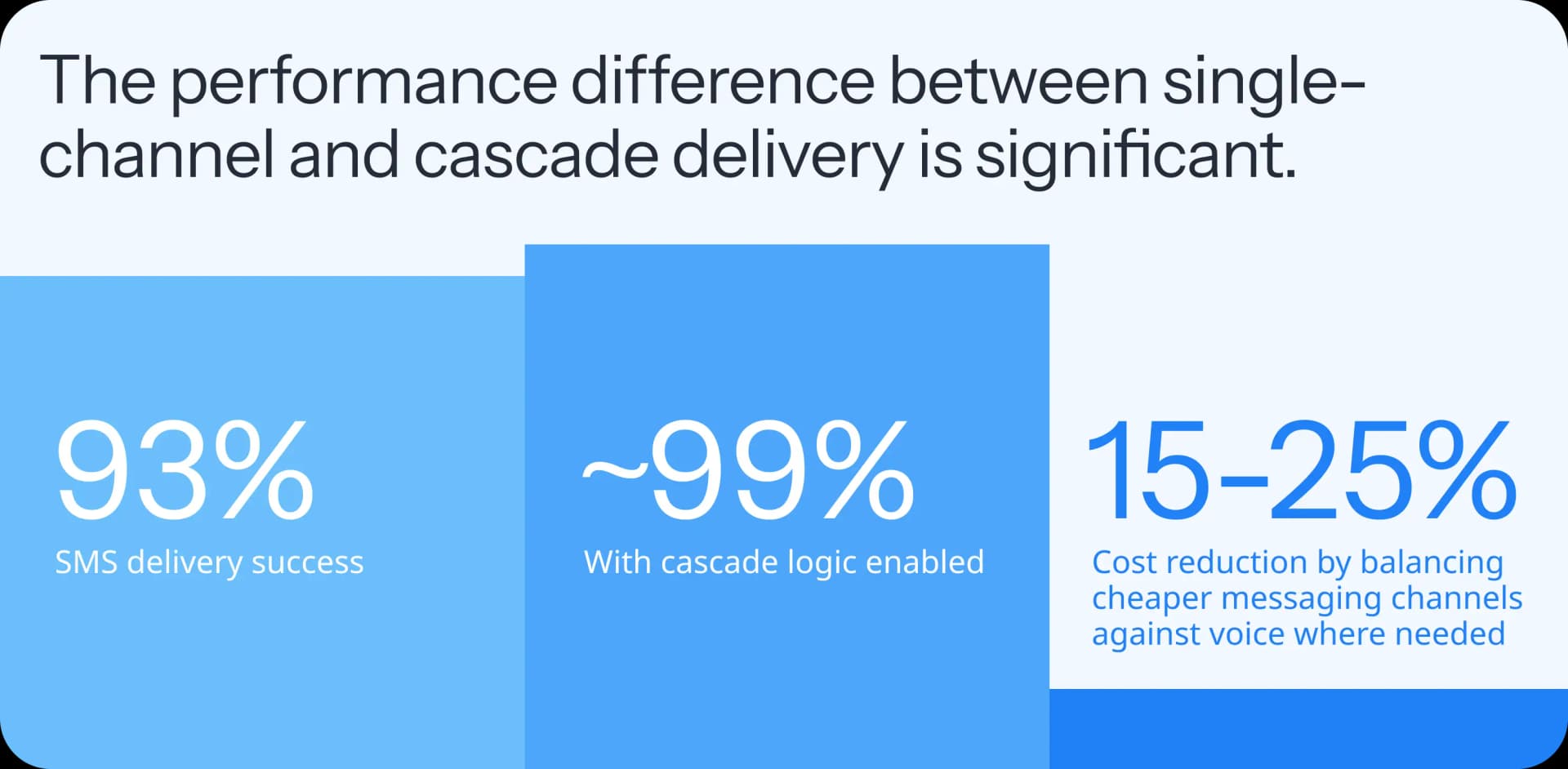
It works out of the box—no custom workarounds needed for regional networks, regulations, or user preferences. In practice, switching from a single-channel setup to cascade delivery increases delivery rates to ~99%—and noticeably fewer failed verifications means fewer support requests.
Every fintech segment has its own authentication requirements, but the underlying infrastructure can be the same. LANCK covers the full stack.
FAQ
What is KYC in fintech and how does it work?
KYC (Know Your Customer) is the mandatory process fintech companies and banks use to verify a user's identity before granting access to financial services. It typically involves collecting a government-issued ID, matching it against a selfie or liveness check, and confirming a phone number or email via a One-Time Password (OTP). The goal is to ensure both regulatory compliance and strengthen fraud prevention.
What is the most secure authentication method for online banking?
There's no single answer—security depends on the specific threat model. For most consumer banking, a combination of biometrics and SMS or app-based OTP provides strong protection. For high-value transactions, step-up authentication with a voice call or authenticator app adds another layer of security.
What is cascade communication in authentication?
Cascade communication is a delivery strategy where, if a verification message fails on the primary channel (e.g., SMS), the system automatically switches to the next one (voice OTP, WhatsApp, etc.) within a set time window. This maximizes successful verification rates without requiring any action from the user.
What is the difference between multichannel and omnichannel authentication?
Multichannel authentication involves using more than one channel to deliver verification—for example, SMS with a voice fallback—where each channel operates independently. Omnichannel goes further: the channels share context and delivery data, so the system learns which channel works best for each user and routes accordingly.
What authentication channels do crypto exchanges use for KYC?
Crypto exchanges typically use the most layered KYC protocols of any fintech segment—combining document verification, proof of address, and multi-factor authentication. SMS OTP and authenticator apps are standard, while voice OTP is frequently used as a fallback. Regulators in major markets now require exchange-grade KYC standards comparable to those of traditional banks.